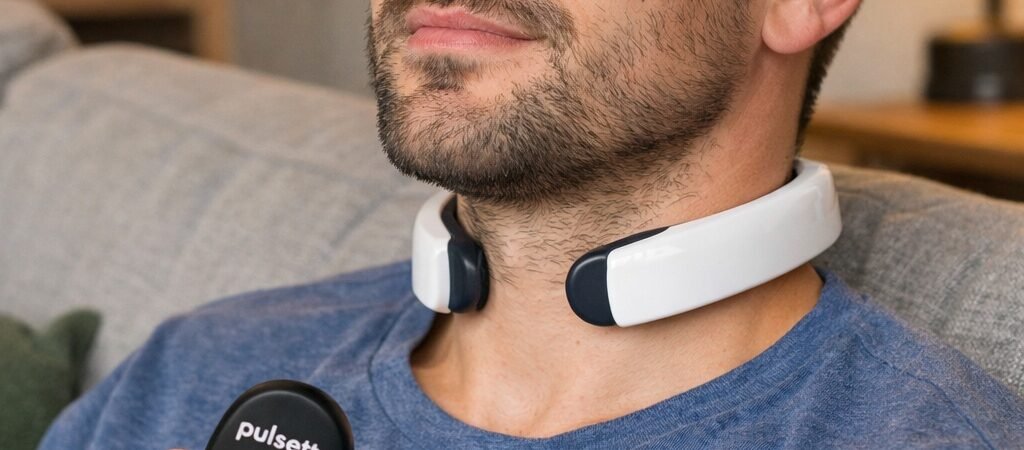
The Pulsetto vagus nerve stimulator has been showing up everywhere lately. If you’ve been dealing with chronic health issues that conventional treatments haven’t quite solved, you’ve probably heard people talking about vagus nerve stimulation.
I’ll be straight with you. This isn’t some secret cure-all that fixes everything overnight.
But for people who’ve exhausted their other options or want to explore non-pharmaceutical approaches, it’s worth understanding what this device actually does and whether it makes sense for your situation.
If You’ve Never Used Pulsetto Before, Here’s What You Need to Know Before Getting Started
Vagus nerve stimulation sounds complicated, but the concept is actually pretty straightforward. Your vagus nerve runs from your brain down through your neck and into your chest and abdomen.
It’s basically a superhighway of communication between your brain and most of your major organs.
The Pulsetto device sits on your neck and sends gentle electrical pulses to stimulate this nerve. The idea is that by activating the vagus nerve, you can potentially influence things like inflammation, stress response, mood regulation, and digestive function.
Here’s the thing though. The Pulsetto is a non-invasive device you use at home.
That’s different from the implanted vagus nerve stimulators that doctors surgically place for conditions like epilepsy.
The implanted versions are FDA-approved medical devices with solid clinical backing. The home-use devices like Pulsetto are newer territory, and the research is still catching up.
That doesn’t mean they don’t work. It just means you need realistic expectations going in.
Who Actually Benefits from Using This Thing
Let me break down who typically gets the most out of vagus nerve stimulation devices.
People with treatment-resistant conditions are often the ones who find this most helpful. If you’ve been dealing with depression that hasn’t responded well to many medications, or migraines that keep coming back despite trying everything your neurologist suggests, you’re probably open to exploring choices.
Same goes for epilepsy that’s hard to control with standard treatments.
The vagus nerve plays a role in regulating mood and can influence seizure activity. Some people with these conditions report improvements when they add vagus nerve stimulation to their existing treatment plan (not as a replacement, but as an addition).
Chronic inflammation and autoimmune conditions are another category. Your vagus nerve is connected to what researchers call the “inflammatory reflex.” When you stimulate the vagus nerve, it can potentially help regulate inflammatory responses in your body.
People with rheumatoid arthritis, Crohn’s disease, or similar conditions sometimes use these devices as part of their management approach.
Biohackers and wellness enthusiasts make up a decent chunk of users too. These tend to be younger guys (25-45 range) who are really into optimizing their health and trying new technologies.
They might not have a specific medical condition but want to improve their stress resilience, sleep quality, or general well-being.
Older adults dealing with many chronic issues often find appeal in a non-pharmaceutical option. When you’re already taking several medications and dealing with their side effects, adding another pill to the mix isn’t always appealing.
A device that might help with several issues at once (stress, inflammation, sleep, digestive problems) can be attractive.
One thing to mention. This isn’t really designed for people who just have occasional stress or the odd headache.
If that’s you, there are probably simpler and cheaper options to try first.
The Pulsetto makes more sense when you’re dealing with persistent, chronic issues that significantly impact your quality of life.
If you’re dealing with chronic conditions that haven’t responded well to conventional treatments, you can check out Pulsetto here to see if it might be worth trying.
Getting Started: Your First Week with the Device
When you first get your Pulsetto vagus nerve stimulator, it arrives with the main device, a charging cable, and some conductive gel. The gel is important because it helps the electrical pulses transfer from the device to your skin effectively.
Day 1-2: Finding the right placement
The device sits on the front of your neck, over where your vagus nerve runs. You’ll feel around for your carotid pulse (the spot where you can feel your heartbeat on your neck), and the device goes just beside that area on either side.
Getting the placement right matters more than most people realize at first. If it’s too high or too low, you won’t get the same effect.
The device should feel snug but not uncomfortable.
You shouldn’t have any trouble swallowing or breathing (obviously).
Starting with lower intensity
The Pulsetto has different intensity levels. When you’re just starting out, go with the lowest setting.
Some people make the mistake of cranking it up right away thinking more stimulation equals better results.
That’s not how this works.
Your body needs time to adjust to the sensation. At lower settings, you might feel a slight tingling or pulsing feeling.
It shouldn’t hurt.
If it’s uncomfortable, the placement is probably off or the intensity is too high.
Session length and frequency
Most people start with 10-15 minute sessions once or twice daily. The device typically comes with pre-set programs designed for different goals (stress relief, better sleep, etc.).
Pick one that matches what you’re trying to address and stick with it for at least a few weeks before switching.
Consistency matters way more than intensity. Using it at a moderate level every day will probably give you better results than doing intense sessions sporadically.
The Biggest Beginner Mistake (and How to Avoid It)
Here’s the mistake that trips up almost everyone when they first start using vagus nerve stimulation devices.
Expecting immediate, dramatic results.
People use it once or twice, don’t feel a massive shift, and decide it doesn’t work. They put it in a drawer and forget about it.
The reality is that vagus nerve stimulation tends to work gradually. Some people notice subtle changes within a few days (like slightly better sleep or feeling a bit less on-edge), but more substantial improvements usually take several weeks of consistent use.
Think about it this way. If you’ve been dealing with chronic inflammation, treatment-resistant depression, or ongoing migraines for months or years, your nervous system has basically been stuck in a certain pattern.
One 15-minute session with a device isn’t going to completely rewire that pattern.
What you’re doing with regular vagus nerve stimulation is gradually shifting your nervous system toward better regulation. That takes time.
How to set yourself up for success instead:
Commit to using it daily for at least 4-6 weeks before deciding whether it’s helping. Keep a simple log of how you’re feeling.
You don’t need anything fancy.
Just jot down your energy level, pain level, mood, sleep quality, whatever symptoms you’re trying to address. Rate them on a scale of 1-10.
After a few weeks, look back at your notes. You might notice patterns you didn’t catch day-to-day.
Maybe your migraine frequency dropped from 4 times a week to twice a week.
Maybe you’re sleeping through the night more often. These gradual improvements are easy to miss if you’re expecting a dramatic overnight transformation.
Also, keep using your other treatments and management strategies. The Pulsetto works best as part of an overall approach, not as a standalone magic solution.
| Timeline | What to Expect | What to Do |
| Days 1-3 | Getting used to the sensation, finding correct placement, possibly no noticeable effects yet | Focus on proper technique, use lowest intensity, try 10-minute sessions |
| Week 1 | Might notice subtle relaxation during or after sessions, slight improvements in sleep quality | Establish consistent daily routine, start tracking symptoms in a simple log |
| Weeks 2-4 | Gradual improvements may become more noticeable, better stress resilience, reduced symptom frequency | Can gradually increase intensity if comfortable, extend to 15-20 minute sessions |
| Weeks 4-6 | Most people who respond well notice meaningful improvements by this point | Review your symptom log to assess whether it’s helping, adjust routine as needed |
What It Actually Feels Like to Use
The physical sensation is hard to describe until you’ve felt it, but I’ll try.
When you turn on the device at a low setting, you feel a gentle tingling or pulsing on your neck. It’s not painful.
Some people describe it as feeling like tiny vibrations.
Others say it’s like a light tapping sensation.
As you increase the intensity, the pulsing becomes stronger. You might feel it radiating slightly into your jaw or down toward your collarbone.
Again, this shouldn’t hurt.
If you feel sharp pain or significant discomfort, turn it down.
During a session, a lot of people report feeling progressively more relaxed. Your breathing might slow down a bit. Some people feel slightly drowsy afterward (which is why some use it before bed).
Others feel more calm and centered but not tired.
For the first few uses, the sensation might feel weird or distracting. That’s normal.
By the fourth or fifth session, most people barely notice it anymore.
It just becomes part of your routine, like brushing your teeth.
Practical Tips for Actually Sticking with It
Making this part of your daily routine is honestly the hardest part. Here’s what helps.
Pair it with something you already do. Use it while you’re having your morning coffee, or right before bed while you’re winding down. Attaching it to an existing habit makes it way easier to remember.
Keep it visible. If the device is buried in a drawer, you’ll forget about it. Keep it on your nightstand or bathroom counter where you see it every day.
Set a phone reminder for the first month. Once it becomes automatic, you won’t need the reminder anymore. But until then, a daily notification helps.
Don’t overthink the “perfect” time to use it. Some programs are designed for specific times of day (like using a relaxation program before sleep), but honestly, using it at a random time is better than not using it at all because you’re waiting for the “ideal” moment.
You can grab your own Pulsetto device here if you’re ready to commit to the consistent routine that actually gets results.
Realistic Expectations: What This Can and Can’t Do
Let’s get real about what you should expect.
What vagus nerve stimulation might help with:
The research and anecdotal reports suggest it can potentially help with reducing inflammation markers, improving heart rate variability (a measure of stress resilience), reducing frequency and severity of migraines, supporting mood regulation in people with depression, improving sleep quality, and reducing symptoms in some digestive disorders.
Notice I said “might” and “potentially.” The effects vary significantly from person to person. Some people get substantial relief.
Others notice modest improvements.
Some don’t respond much at all.
What it definitely won’t do:
It won’t cure chronic diseases. It won’t replace necessary medications (don’t stop taking prescribed meds without talking to your doctor).
It won’t work instantly.
And it won’t work the same for everyone.
If you have epilepsy, this isn’t a substitute for anti-seizure medication. If you have severe depression, it’s not a replacement for therapy and medication.
It’s a complementary tool, not a cure-all.
The implanted vagus nerve stimulators used in medical settings have stronger evidence behind them because they provide more consistent, targeted stimulation. The non-invasive home devices like Pulsetto are less powerful by nature, which means the effects are generally more subtle.
That said, subtle improvements can still be meaningful. If you’ve been dealing with daily migraines and VNS reduces them to a few times a week, that’s a significant quality of life improvement even if it’s not a finish cure.
Who Should Probably Skip This
A few categories of people should avoid vagus nerve stimulation devices or at least talk to a doctor first.
If you have a pacemaker or implanted defibrillator, electrical stimulation near your neck could potentially interfere with the device. Not worth the risk.
If you’re pregnant, there isn’t enough research on safety during pregnancy to recommend it.
If you have any kind of implanted electronic device (not just cardiac devices), check with your doctor before using this.
If you have active bleeding or open wounds on your neck, obviously wait until those heal.
If you have a history of certain heart conditions (particularly bradycardia, or abnormally slow heartbeat), vagus nerve stimulation could potentially make it worse. Check with your cardiologist.
For everyone else, these devices are generally considered safe for home use. The most common side effects people report are temporary skin irritation where the device sits, occasional headaches (which usually go away as you get used to it), and temporary changes in voice or throat discomfort during use.
The Gel, Charging, and Other Practical Stuff
Conductive gel: You need to use it. Some people try to skip this step because they forget or run out.
The device won’t work nearly as well without it.
The gel conducts the electrical pulses from the device into your skin. Without it, the pulses mostly just stay on the surface and don’t reach the nerve.
The device comes with some gel, but you’ll eventually need to buy more. There are specific gels made for the device, but some people use regular ultrasound gel or EKG gel from medical supply stores (which is often cheaper).
Battery life: You’ll need to charge it every few days to a week depending on how often you use it. Each session drains a bit of battery.
Just get in the habit of charging it overnight once or twice a week.
Cleaning: Wipe down the contact points (the metal parts that touch your skin) after each use. Gel residue can build up and affect how well it works.
A damp cloth works fine for this.
Skin sensitivity: If you notice irritation where the device sits, make sure you’re using enough gel (dry metal on skin causes more irritation) and that you’re not using it at too high an intensity. If irritation continues, try using it every other day instead of daily until your skin adjusts.
Check current pricing and availability for the Pulsetto here, and make sure to grab extra conductive gel when you order.
How This Fits into Your Overall Health Approach
Here’s how I think about devices like the Pulsetto vagus nerve stimulator.
They’re tools, not solutions. If you’re dealing with chronic health issues, you probably need many tools in your toolkit.
Medication, lifestyle changes, stress management, sleep hygiene, diet modifications, whatever your doctor recommends, those all matter.
VNS devices add another tool to that kit. For some people, it’s the tool that finally tips things in the right direction.
For others, it provides modest additional benefit on top of everything else they’re doing.
The nice thing about it being non-pharmaceutical is that you’re not adding another medication with potential side effects and interactions. For people who are already taking several drugs, that’s appealing.
It’s also something you control. You can use it when you need it, adjust the intensity, try different programs.
That sense of agency over your own health management matters to a lot of people, especially those who feel like they’ve been shuffled from specialist to specialist without much improvement.
But (and this is important), don’t use this as a reason to avoid conventional medical care. If you have a condition that needs medical treatment, get that treatment.
Use VNS as a complement, not a replacement.
Comparing This to Other Options You Might Be Considering
If you’re looking at the Pulsetto, you’re probably also looking at other alternatives to standard pharmaceutical treatments.
Meditation and breathing exercises also activate the vagus nerve, and they’re free. The advantage of a device is that it provides consistent stimulation without requiring you to master meditation technique.
Some people do both.
Other VNS devices exist (there are a few brands making similar products). They generally work on the same principle.
Pulsetto is one of the more popular options, but you might want to compare features and prices.
Supplements and dietary changes can support vagus nerve function too (omega-3s, probiotics, anti-inflammatory diets). Again, these work differently than direct stimulation.
You can do both.
Physical techniques like gargling, singing, or cold water immersion can temporarily stimulate the vagus nerve. They’re free and worth trying, but the effects are brief compared to consistent use of a stimulation device.
The device route makes the most sense if you’ve already tried lifestyle approaches without enough improvement, or if you want something that provides consistent daily stimulation without requiring active effort.
Final Thoughts: Is This Actually Worth Trying
Here’s my honest take after looking at the research and user experiences.
If you’re dealing with chronic conditions that haven’t responded well to conventional treatment, the Pulsetto vagus nerve stimulator is probably worth a try. The cost is significant but not outrageous compared to ongoing medication costs or other choice treatments.
The risk is minimal for most people.
And enough people report meaningful improvements that it’s reasonable to test it out for yourself.
The key is going in with realistic expectations. This isn’t going to cure chronic disease or replace medical treatment.
It might reduce symptom frequency and severity.
It might improve your quality of life in subtle but meaningful ways. Or it might not do much for you at all.
You won’t know which category you fall into without trying it consistently for at least 4-6 weeks.
The people who seem to get the most out of these devices are those who commit to using them daily as part of a broader health management approach, who track their symptoms to notice gradual improvements, and who aren’t expecting instant dramatic results.
If that sounds like you, and you’re willing to invest the time and money to find out whether it helps, then it’s worth considering.
You can order the Pulsetto directly from the manufacturer here and try it out for yourself to see if it makes a difference for your specific situation.
The bottom line is this. Vagus nerve stimulation has legitimate science behind it, even though the home-use devices are newer and have less extensive research than implanted medical devices.
For people with treatment-resistant conditions, chronic inflammation, or persistent symptoms that impact daily life, it offers a non-pharmaceutical option worth exploring.
Just remember that consistency matters more than intensity, that results show up gradually rather than overnight, and that this works best as one tool among several in your overall health management approach.